
Editing guide
How to Edit iPhone Photos to Look Like Film Under String Lights
A practical iPhone guide for string-light photos: cleaner skin, softer bulbs, restrained grain, and film-style settings that keep warm evening scenes atmospheric without turning everything yellow.
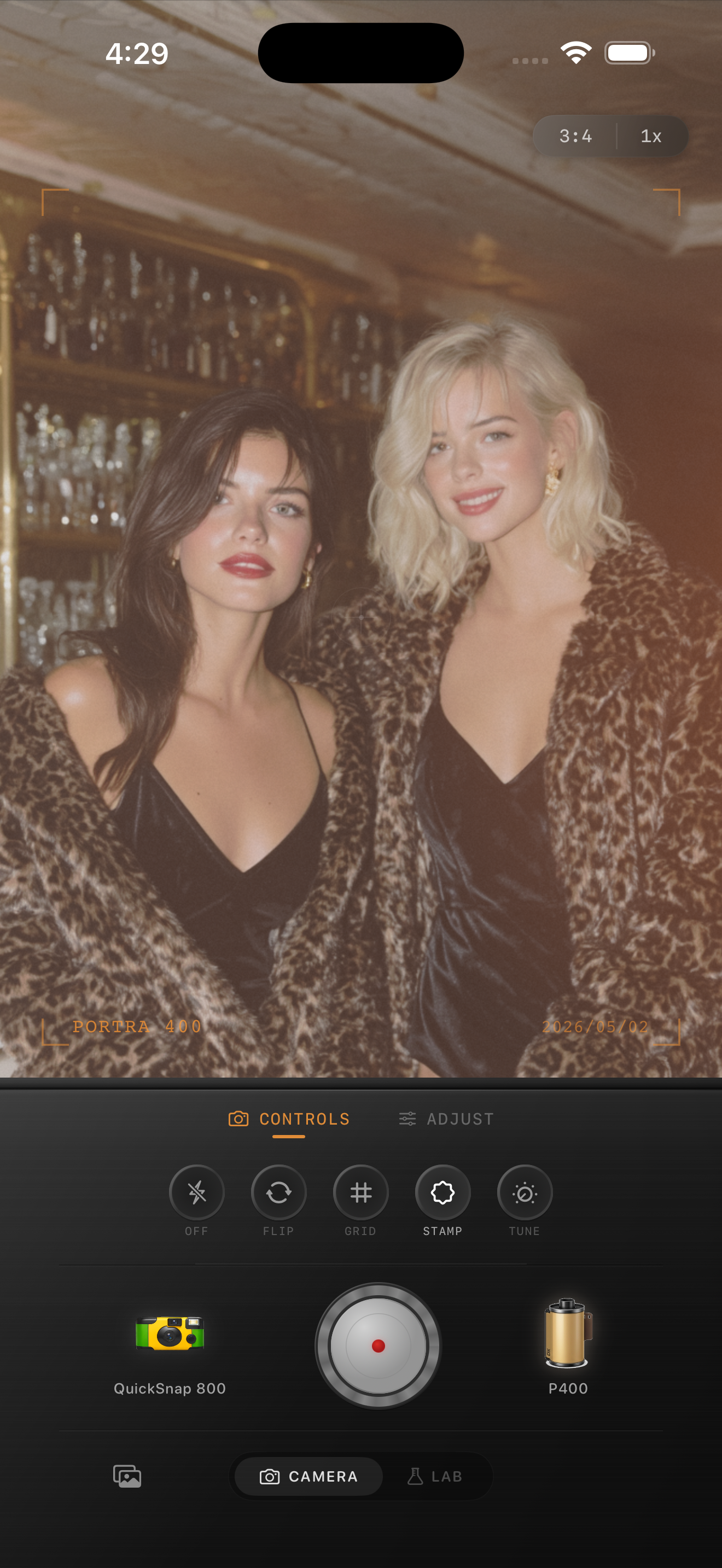
String-light photos need warmth with boundaries
String lights already give you the softness and warmth that people usually want from a film edit. The danger is assuming the scene can handle unlimited extra warmth. Once skin, bulbs, wood, drinks, and the background all turn the same color, the photo loses its atmosphere.
A believable film-inspired edit keeps the bulbs warm while protecting the areas between them. That negative space is what makes string-light photos feel intimate instead of flat.
- Keep faces a little cleaner than the bulbs.
- Use moderate grain so hair, glassware, and jackets stay readable.
- Lower highlights before adding extra fade.
- Warm the scene gently instead of covering every shadow in amber.
- Choose a balanced camera body unless you want a rough party-snapshot feel.
A reliable string-light starting recipe
Start around film intensity 74-88%, grain 24-38%, warmth +3 to +9, fade 3-6%, and vignette 4-8%. That range usually softens the digital finish while keeping the bulbs recognizable as light sources instead of turning them into flat blobs.
If the photo already has very warm bulbs, lower warmth first and let grain or camera softness do more of the analog work. String-light photos usually fail from color buildup long before they fail from not feeling nostalgic enough.
Fix faces before you shape the mood
The fastest way to judge a string-light edit is to check skin first. If cheeks, noses, and foreheads already look too orange, the whole frame is heading in the wrong direction even if the lights feel romantic.
Once faces look believable, check whether the bulbs still have some shape and whether the darker background zones still feel open enough to create depth. That order keeps the warmth cinematic instead of muddy.
Let the lights glow without swallowing the scene
Good string-light photos usually rely on contrast between small warm bulbs and the cooler or darker space around them. If the whole image gets lifted and warmed equally, that contrast disappears and the photo starts looking cheap.
Nostalgia Cam works well here because you can start with a cleaner compact-film or 35mm-inspired body, then add just enough grain, warmth, and fade to make the frame feel like a real evening print. If you use Kodak-style or Fuji-style language, keep it framed as inspiration only and not as any affiliation claim.
Keep evening warmth balanced in Nostalgia Cam
Use Nostalgia Cam to balance camera body, grain, warmth, fade, and vignette so string-light photos keep their glow, natural skin tones, and film-inspired softness without turning fully yellow.
FAQ
Should string-light photos use a lot of warmth to look like film?
Usually no. The scene is already warm, so a smaller warmth move works better. Too much added warmth makes skin, bulbs, and background surfaces collapse into the same orange cast.
Why do string-light edits lose depth so easily?
They usually lose depth when fade and warmth are pushed before highlights and skin are balanced. Keep the bulbs shaped and the darker spaces open first, then add texture carefully.