
Editing guide
How to Edit Grandparent Travel Photos to Look Like Film on iPhone
A practical travel-portrait film recipe for iPhone: softer contrast, gentle skin color, restrained grain, and enough fade to make grandparent photos feel timeless instead of overprocessed.
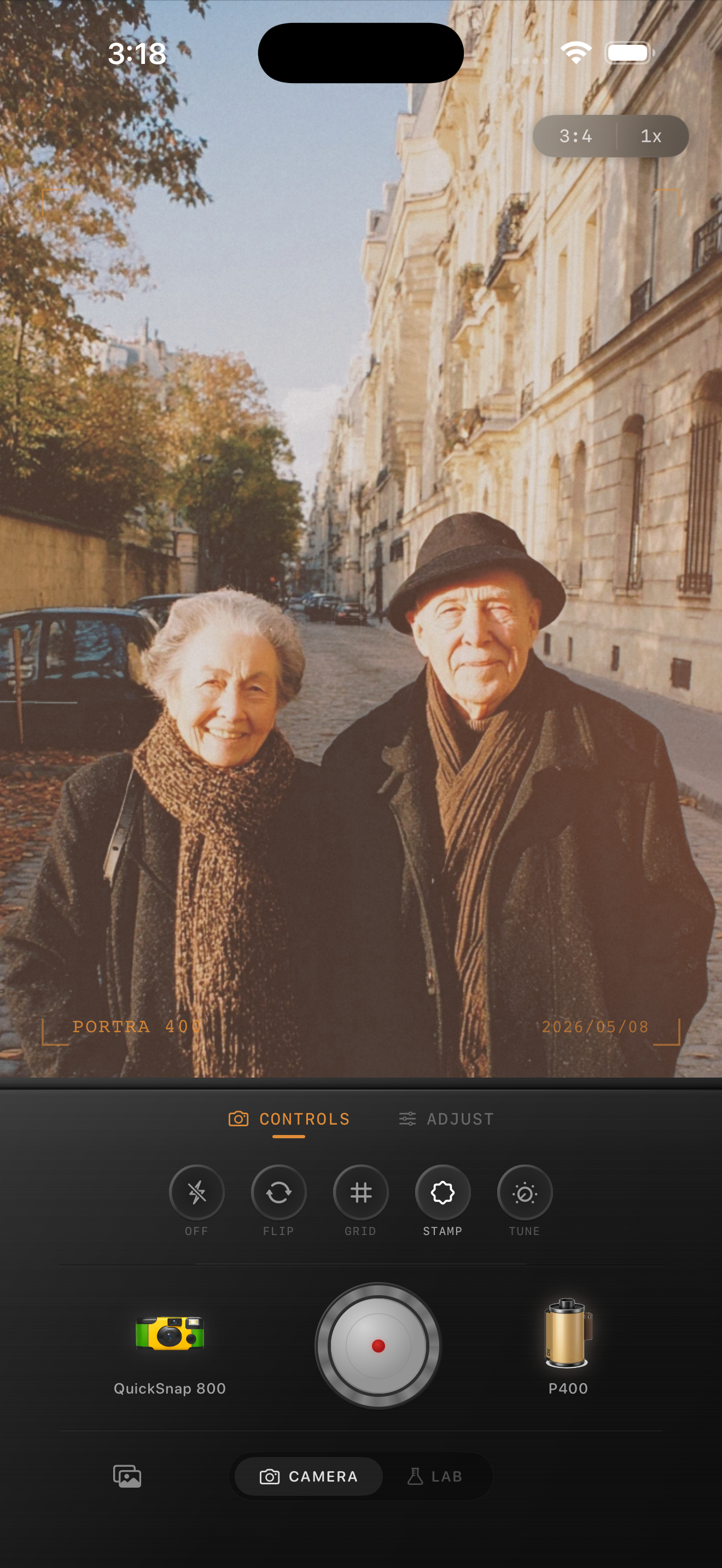
Keep the photo gentle before you make it nostalgic
Grandparent travel photos usually already have what people want from a film edit: meaningful faces, real places, and a sense of time passing. The job is not to bury that under a heavy preset. It is to make the iPhone file feel softer, calmer, and more printed.
The most common mistake is adding too much warmth and grain too quickly. That can make skin look patchy and turn soft daylight into a muddy vintage effect instead of a believable travel memory.
- Protect faces before pushing atmosphere.
- Use softer contrast instead of heavy fade.
- Keep warmth modest so skin stays believable.
- Choose fine-to-medium grain, not rough disposable texture.
- Let the location stay readable so the travel context remains part of the memory.
A dependable starting recipe for travel portraits
Start around film intensity 68-82%, grain 20-32%, warmth +4 to +9, fade 4-8%, and vignette 3-7%. That range usually removes the polished iPhone finish without making wrinkles, coats, or bright pavement look harsh.
If the photo was taken under pale morning light, use a little more warmth. If the scene already has warm stone, café light, or sunset color, keep warmth lower and rely more on softer contrast plus grain.
Edit from skin, coats, and pavement
Travel portraits with older subjects usually break in predictable places: skin can go too orange, white hair can lose detail, and sidewalks or stone buildings can become overly crisp. Judge the edit from those anchor points before deciding it is finished.
Once faces feel calm and believable, add only enough grain and fade to make the whole image feel like a small print from a trip, not an aggressively retro filter.
Choose a cleaner film mood than a party-photo look
Most grandparent travel portraits work better with a balanced 35mm-inspired or compact-film body than with a rough disposable style. You want character, but usually not hard flash, damaged edges, or loud color shifts.
In Nostalgia Cam, start with a cleaner camera body, then fine-tune grain, warmth, fade, and vignette until the photo feels timeless and human instead of obviously processed.
Keep family travel memories soft and timeless
Use Nostalgia Cam to shoot or import travel portraits, then balance camera body, grain, warmth, fade, and vignette so meaningful family photos feel printed, calm, and naturally film-inspired.
FAQ
Should grandparent travel photos use a lot of grain to look like film?
Usually no. Fine-to-medium grain works better because it adds texture without making skin, hair, or clothing look rough.
What is the biggest mistake in editing older family travel portraits?
Overwarming the image and pushing texture too far. Softer contrast and restrained grain usually create a more believable film feeling than a heavy vintage effect.