
Editing guide
Best Film Settings for Window Light Dinner Photos on iPhone
A practical window-light dinner film recipe for iPhone: softer highlights, cleaner skin and plate color, restrained grain, and enough warmth to feel like a print instead of a preset.
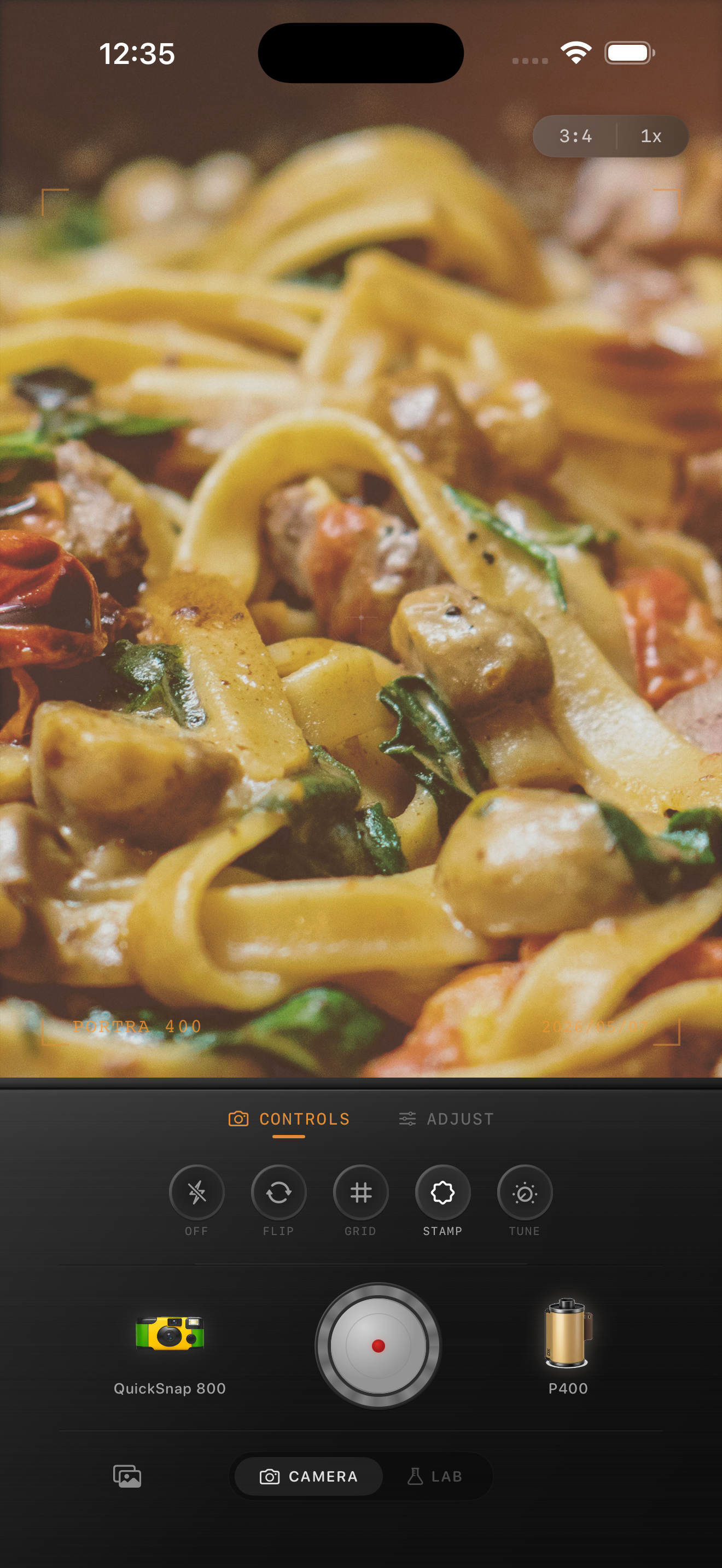
Why window light dinner photos usually need less effect
Dinner photos shot near a window already have a lot going for them: directional light, natural contrast, and plate color that feels richer than it does under overhead bulbs. A film-inspired edit should support that softness instead of flattening the table into beige shadows.
The most common mistake is stacking warmth, fade, and grain until food, skin, napkins, and tabletops all land in the same muddy range. Window-light dinner scenes usually need restraint more than drama.
- Keep grain moderate so plate texture stays clean.
- Let highlights on glass and cutlery stay soft, not hazy.
- Use warmth carefully so skin and pasta do not turn the same orange.
- Favor a cleaner body over a rough disposable look.
- Add vignette only if the corners feel distractingly bright.
A reliable settings baseline for dinner by a window
Start around film intensity 68-82%, grain 16-28%, warmth +4 to +8, fade 3-6%, and vignette 2-6%. That range usually adds enough analog softness to calm the iPhone file while keeping food detail, plate edges, and faces readable.
If the shadows under the tableware go flat, lower fade first. If the plate or tablecloth starts looking dirty, lower grain next. Window-light scenes often look most natural when the film feel comes from tonal softness rather than heavy texture.
Check food color separately from skin tone
A good dinner edit passes two quick checks. First, the food should still look edible and specific, not just generically warm. Second, skin should stay lively without matching the sauce, candle, or wood table too closely.
If pasta, bread, or plates all start merging together, the warmth is probably too high or the contrast is too soft. Judge the image from those small differences instead of only looking at the whole frame.
Let the table tell the story
Window-light dinner photos usually feel nostalgic because of the little details around the plate: glassware, hands, menus, shadows on the table, and the quiet falloff from the window. A cleaner compact-film or 35mm-inspired body usually keeps those details intact better than a rough disposable effect.
In Nostalgia Cam, start with the calmer body and add only enough grain and warmth to make the dinner feel printed. If you describe the result with Kodak-style or Fuji-style language, keep it framed as inspiration only and not as any affiliation claim.
Keep dinner photos soft, clean, and nostalgic
Use Nostalgia Cam to tune camera body, grain, warmth, fade, and vignette so window-light dinner photos feel like a natural film print instead of an overcooked food preset.
FAQ
Should window light dinner photos use strong grain to look like film?
Usually no. Moderate grain is enough because the natural window contrast and table detail already carry much of the mood.
Why do dinner film edits make food and skin the same color?
Because warmth gets pushed before tonal control. Reduce fade or grain first, then use only enough warmth to keep the scene lively without turning everything orange.